
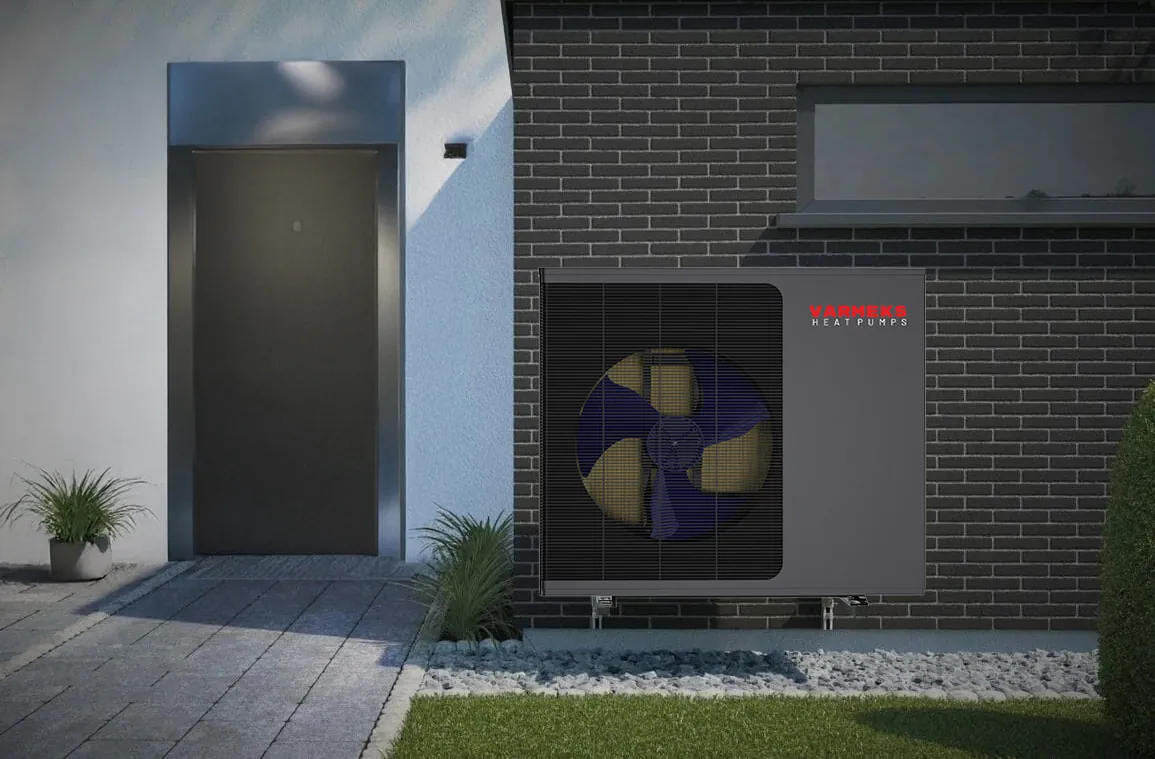
Heat pumps provide comfortable, efficient, and eco-friendly living spaces by meeting heating, cooling, and hot water needs with low energy consumption.
Energy efficiency and sustainable living solutions have become more important than ever. Rising energy costs, increasing environmental awareness, and the need to reduce carbon emissions are driving users toward more efficient technologies. In this context, heat pumps have emerged as one of the most important modern climate control solutions thanks to their low energy consumption, high performance, and environmentally friendly operation.
A heat pump is a highly efficient system that uses natural energy from the air, water, or ground to provide heating, cooling, and domestic hot water production. Compared to conventional fuel-based systems, it operates with lower energy consumption and supports sustainable energy use.
Today, heat pumps are widely used in:
Heat pumps convert naturally available energy from the environment into usable thermal energy through a specialized refrigeration cycle.
The system extracts low-temperature energy from the surrounding environment and, through compressor technology, raises it to a higher temperature before transferring it indoors.
This operating principle provides several advantages:
One of the most important advantages of heat pumps is their reverse-cycle technology, which allows them not only to provide heating but also cooling. This enables comfortable indoor temperatures throughout the year—heating in winter and cooling in summer.
In addition, many modern heat pump systems can be integrated with:
Heat pumps are classified according to the energy source they utilize. Each type offers unique advantages and application areas.
Air source heat pumps are among the most commonly used systems. They utilize energy from the outdoor air to provide heating and cooling.
AdvantagesWater source heat pumps use energy extracted from groundwater or surface water sources. Thanks to stable source temperatures, they can deliver highly efficient performance.
AdvantagesGround source heat pumps operate using geothermal principles. They take advantage of the stable temperatures below the ground surface to achieve exceptional efficiency throughout the year.
AdvantagesHeat pumps not only reduce energy consumption but also provide a modern and comfortable climate control solution.
Thanks to their high COP (Coefficient of Performance) values, heat pumps can generate significantly more thermal energy than the electricity they consume. This reduces energy costs while supporting sustainable energy use.
Today, energy efficiency is no longer just an economic preference—it is also an environmental responsibility.
Heat pumps stand out in modern building projects thanks to their low carbon footprint and outstanding energy performance.
In addition, government incentives, green building certifications, and energy-efficiency regulations in many countries continue to accelerate the adoption of heat pump technologies.
Heat pumps are considered one of the most important climate control technologies of the future due to their high efficiency, low energy consumption, and environmentally friendly operation.
Their ability to provide heating, cooling, and domestic hot water production through a single system offers significant advantages for both residential users and commercial facilities.
Varmeks heat pumps combine advanced engineering, energy-efficient technologies, and sustainable solutions to deliver a reliable, high-performance alternative for modern living spaces.